The resource file / Start here
Traffic court questions.
A clearer starting point.
Organize your papers, explore legal topics, and prepare questions for a qualified lawyer. Start with three essentials: the document, its context, and what you need explained.
Explore legal resourcesGeneral reading to support a better-informed conversation.
01 / Choose a subject
An index for your next question.
The archive spans several legal and financial subjects. Pick a topic to build familiarity, then note where general information stops and your own circumstances begin.
Know the document
Explore agreement terminology, then collect the clauses and versions you want a lawyer to review. Keep questions tied to a specific passage.
Browse contracts 02 / PropertyPlace the issue in context
Use property reading to identify unfamiliar terms. Bring the actual document and a clear description of your question to a qualified professional.
Browse property 03 / LitigationUnderstand the vocabulary
Read for background on dispute-related language. The facts and papers in a particular matter require individual review, even when the terminology sounds familiar.
Browse litigation 04 / FinanceConnect the records
Browse financial topics alongside your existing statements or correspondence. Separate what you can document from assumptions you would like a professional to clarify.
Browse finance02 / Build a useful file
A little organization.
A more focused conversation.
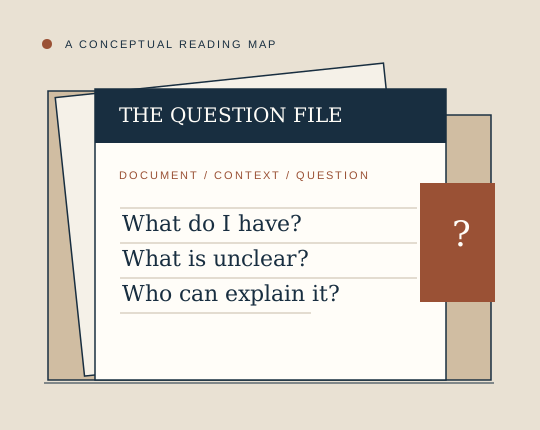
Preparation begins with what is already in front of you. This three-part map keeps your reading connected to the questions you actually want answered.
Gather the document
Keep related papers together and preserve complete copies, including attachments. Record where each item came from. Ask a lawyer what is relevant before sending personal or confidential material.
Add the context
Write a brief factual account in your own words. Mark anything you are uncertain about, and keep it separate from the text of notices, contracts, or correspondence.
Frame the question
List the terms, passages, and practical concerns you need explained. Ask a qualified lawyer about the appropriate next steps for your circumstances, including anything that may need prompt attention.
03 / From the shelves
Read with a purpose.
An article is a reference point. Check its date and subject before using it, and keep track of the questions it raises rather than treating it as an answer to your own matter.
04 / Common questions
Before you turn the page.
What can a traffic court attorney help me understand?
A qualified lawyer can explain how the documents and circumstances of a traffic matter relate to the relevant legal process. Use an initial conversation to ask about the lawyer’s experience, the scope of any proposed work, and how questions will be handled. This resource index does not assess individual matters.
What papers should I organize before speaking with a lawyer?
Start with the papers you already have: notices, correspondence, receipts, agreements, and any relevant records. Keep original wording and dates visible, and separate your own notes from the documents themselves. Ask the lawyer which materials are needed and how to send them securely before sharing sensitive information.
How should I record questions about a notice?
Write down the parts you do not understand using the document’s own labels or wording. Note which page each question concerns, and distinguish something the document says from something you recall. A qualified lawyer can help explain its significance; a general article cannot determine what it means for you.
Can an article tell me what to do in my case?
No. An article can introduce terminology and help you frame a question, but it cannot review all the facts of your situation. Place, timing, documents, and circumstances can change the analysis. Ask a qualified lawyer for advice tailored to your matter before relying on general reading to make a decision.
How do I use the contracts and property sections?
Use these sections as starting points for vocabulary and further reading. Keep a copy of the specific agreement or property document you want to discuss, and record the passages that seem unclear. Ask a qualified lawyer whether the topic covered by an article is relevant to that document and your circumstances.
What should I ask about legal fees and communication?
Ask the lawyer to explain the proposed scope of work, how fees and expenses are described, and how updates will be communicated. You can also ask who will answer routine questions. Seek clarification of unfamiliar language in any proposed engagement documents so you understand the arrangement you are considering.
Why should I check the date and context of an article?
Legal and financial writing reflects a particular time and context. An older article may remain useful for background while requiring additional verification. Check its stated date, subject, and geographic references, then ask a qualified professional whether the information is relevant and current for the question you need answered.
Where can I continue reading on this site?
The Blog offers a broad reading archive, while the topic sections group material under subjects such as contracts, litigation, and finance. Other collects additional material. Choose a specific question before browsing, note useful terms, and keep a short list of articles you want to discuss with a qualified professional.
Keep a question in view
Start with the subject that matters to you.
Use the resource directory to continue reading, and take your individual questions to a qualified lawyer.
Open the resource directory